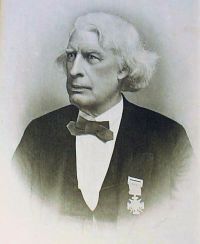
Albert Mackey

Albert Mackey

Summary

Portrait of Albert Mackey Albert Mackey The Principles of Masonic Law… (1856 | portal)

The division of wrongs, by the writers on municipal law, into private and public, or civil injuries and crimes and misdemeanors, does not apply to the jurisprudence of Freemasonry. Here all wrongs are crimes, because they are a violation of the precepts of the institution; and an offense against an individual is punished, not so much because it is a breach of his private rights, as because it affects the well-being of the whole masonic community.
Source: Wikisource

Portrait of Albert Mackey Albert Mackey The Principles of Masonic Law… (1856 | portal)

Whatever moral defects constitute the bad man, make also the bad Mason, and consequently come under the category of masonic offenses. The principle is so plain and comprehensible as to need no further exemplification. It is sufficient to say that, whenever an act done by a Mason is contrary to or subsersive of the three great duties which he owes to God, his neighbor, and himself, it becomes at once a subject of masonic investigation, and of masonic punishment.
Source: Wikisource

Portrait of Albert Mackey Albert Mackey The Principles of Masonic Law… (1856 | portal)

Religion and politics are subjects which it is well known are stringently forbidden to be introduced into Masonry. And hence arises the doctrine, that Masonry will not take congnizance of religious or political offenses.
Heresy, for instance, is not a masonic crime. Masons are obliged to use the words of the Old Charges, "to that religion in which all men agree, leaving their particular opinions to themselves;" and, therefore, as long as a Mason acknowledges his belief in the existence of one God, a lodge can take no action on his peculiar opinions, however heterodox they may be.
Source: Wikisource

Get perspective with Kwize: daily news enlightened by great literature