Summary

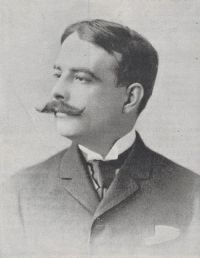
Portrait of Edgar Saltus Edgar Saltus Oscar Wilde: An Idler's Impression

For Phémé typified what modern occultism terms the impact — the premonition that surges and warns. It was Wilde's fate to die three times — to die in the dock, to die in prison, to die all along the boulevards of Paris. Often since I have wondered could the goddess then have been lifting, however slightly, some fringe of the crimson curtain, behind which, in all its horror, his destiny crouched.
Source: Wikisource

Portrait of Edgar Saltus Edgar Saltus Oscar Wilde: An Idler's Impression

On any catalogue of Wilde's plays there should be written: Here lions might have been. For assuming his madness, one must also admit his genius and the uninterrupted conjunction of the two might have produced brilliancies such as few bookshelves display.
Therein is the tragedy of letters. Renan said that morality is the supreme illusion. The diagnosis may or may not be exact. Yet it is on illusions that we all subsist. We live on lies by day and dreams at night. From the standpoint of the higher mathematics, morality may be an illusion. But it is very sustaining.
Source: Wikisource

Portrait of Edgar Saltus Edgar Saltus Oscar Wilde: An Idler's Impression

Oscar Wilde: An Idler's Impression OSCAR WILDE
ears ago, in a Paris club, one man said to another: "Well, what's up?" The other shook a paper: "There is only one genius in England and they have put him in jail."
One may wonder though whether it were their doing, or even Wilde's, that put him there. One may wonder whether it were not the high fates who so gratified him in order that, from his purgatory, he might rise to a life more evolved. But that view is perhaps obvious. Wilde himself, who was the least mystic of men, accepted it.
Source: Gutenberg

Get perspective with Kwize: daily news enlightened by great literature