Summary

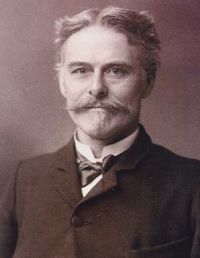
Portrait of Edward Drinker Cope Edward Drinker Cope Remarks on fossil reptiles from the Cretaceous of Kansas (1870)

They comprised the half inch, or inch united portions before referred to. If these radicular portions of the seed were of the nature of root rather than of stem, we might expect to see lateral fibres push from them, as we do see from the true roots, which start out below the union. But these parts are as free from rootlets as any portion of the true stems above the cotyledon points, indicating, as had been suggested, that their properties were rather of stem than of root.
Source: Wikisource

Portrait of Edward Drinker Cope Edward Drinker Cope Remarks on fossil reptiles from the Cretaceous of Kansas (1870)

Cope also exhibited the humeri and femora of Polycotylus, which were like those of Plesiosaurus, and measured 18 inches in length.
Mr. Thomas Meehan exhibited several specimens of the Maclura aurantiaca, the common osage orange, in which the plants were inarched together in pairs in a remarkable way. He said the osage orange was extensively grown as a hedge plant, and in digging up the one year plants, these united twins were usually found in the proportion of about one score in ten thousand. Double kernels were common occurrences in many seeds.
Source: Wikisource

Get perspective with Kwize: daily news enlightened by great literature