Summary

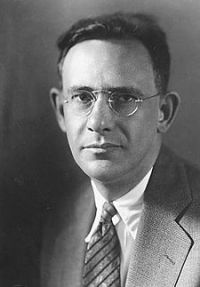
Portrait of Edward Sapir Edward Sapir A note on the first person plural in Chimariko (1917–1920)

The first person singular is characterized by the absence of a prefix except, in the case of stems with initial vowel, for the prefixed article-like element ṭ-, which is not properly a possessive pronominal element; the corresponding plural has ṭ-a-, the article-like ṭ- plus the properly pronominal -a-, or (before vowels) ṭ-a-ṭ-, in which ṭ- seems to be used pleonastically. The only pronominal series in Salinan not characterized by a distinctive a- in the first person plural is the objective, suffixed to the verb (-ak me; -t’ak us)
Source: Wikisource

Portrait of Edward Sapir Edward Sapir A note on the first person plural in Chimariko (1917–1920)

In most cases, there is no confusion between the two forms, i. e., if the first person singular is i or y, the first person plural is ya. A few instances appear, however, in which this does not hold, and we have i in the singular, and tc or ts in the plural. In a limited number of cases also, either form may apparently be used, as qε·-i-xanan, qε·-tce-xanan I shall die, i-saxni, tca-sxani I cough [perhaps better understood as stem asax-, with i displacing a- of stem; tc- prefixed: tc-asax-ni. Cf. tc-a·wi·n I fear and other singulars in tc-a-] .
Source: Wikisource

Portrait of Edward Sapir Edward Sapir A note on the first person plural in Chimariko (1917–1920)

As it is, we must make shift to get on with such material as has been spared us and be doubly thankful for the fragmentary data that Dixon was able to secure in 1906 from the one or two aged or half-witted survivors of the tribe [1] . The present note will serve to illustrate how unexpected and far-reaching may be the threads that bind Chimariko to geographically remote languages in California.
Source: Wikisource

Get perspective with Kwize: daily news enlightened by great literature