Summary

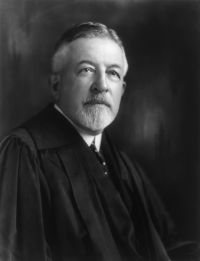
Portrait of Edward Terry Sanford Edward Terry Sanford Lewis v. Roberts — Opinion of the Court

Section 1 (11) , being Comp. St. § 9585 declares that the word 'debt' as used in the Act shall, unless inconsistent with the context, be construed to include 'any debt, demand, or claim provable in bankruptcy.'
It is clear that a judgment for tort is provable under the express provisions of section 63a (1) . The language is broad and unqualified.
Source: Wikisource

Portrait of Edward Terry Sanford Edward Terry Sanford Lewis v. Roberts — Opinion of the Court

The result of this would be that a person having property in excess of his other debts could not be adjudged an involuntary bankrupt under section 3b of the Act (Comp. St. § 9587) although owing judgments for tort exceeding the amount of his property. Clearly Congress did not intend so anomalous a result.
The trustee contends, however, that despite the broad language of section 63a (1) , the decision in Wetmore v. Markoe, 196 U.S. 68, 25 S.C.t. 172, 49 L. Ed. 390, 2 Ann. Cas. 265, necessarily leads to the conclusion that only judgments founded in debt are provable claims.
Source: Wikisource

Get perspective with Kwize: daily news enlightened by great literature