Summary

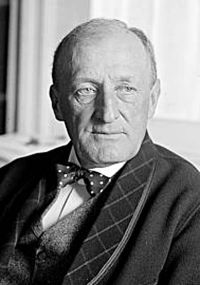
Portrait of James Clark McReynolds James Clark McReynolds Lesser v. Gray — Opinion of the Court

When an alleged debt or obligation is ascertained to be invalid-without lawful existence-the claim based thereon is necessarily disallowed. A disallowed claim and a nonprovable debt are not identical things; and a failure accurately to observe the distinction has led to confusion in argument.
The United States district court, being of opinion that an implied condition in Lesser's contract terminated it when the involuntary bankruptcy proceeding was begun, held that the bankrupt incurred no obligation to pay damage by reason of the firm's failure fully to comply therewith.
Source: Wikisource

Portrait of James Clark McReynolds James Clark McReynolds Lesser v. Gray — Opinion of the Court

Debts of the bankrupt may be proved and allowed against his estate which are founded upon an open account, or upon a contract, express or implied; and unliquidated claims may be liquidated in such manner as the court shall direct, and may thereafter be proved and allowed. (§ 63.)
A bankruptcy court in which an estate is being administered has full power to inquire into the validity of any alleged debt or obligation of the bankrupt upon which a demand or claim against the estate is based.
Source: Wikisource

Portrait of James Clark McReynolds James Clark McReynolds Lesser v. Gray — Opinion of the Court

A motion to dismiss must be denied. Plaintiff in error seasonably set up and claimed that, because the bankruptcy court adjudicated his debt to be not provable (Re Inman & Co. 175 Fed. 312) , the proceedings in bankruptcy and discharge of defendant constituted no bar to a recovery thereon in the state court. A Federal issue is raised and we cannot say that it is too frivolous to give jurisdiction.
Source: Wikisource

Get perspective with Kwize: daily news enlightened by great literature