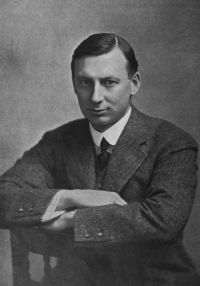
Edward Verrall Lucas

Edward Verrall Lucas

Summary

Portrait of Edward Verrall Lucas Edward Verrall Lucas Highways and Byways in Sussex (1904)

Castle, cathedral, church—these are Arundel; the town itself is secondary, subordinate, feudal. The castle is what one likes a castle to be—a mass of battlemented stone, with a keep, a gateway, and a history, and yet more habitable than ever. So many of the rich make no effort to live in their ancestral halls; and what might be a home, carrying on the tradition of ages, is so often only a mere show, that to find an historic castle like Arundel still lived in is very gratifying. In Sussex alone are several half-ruined houses that the builders could quickly make habitable once more.
Source: Wikisource

Portrait of Edward Verrall Lucas Edward Verrall Lucas Highways and Byways in Sussex (1904)

It is impossible to lose the feeling that the right place for cattle—even for Alderneys—is the meadow. Cows in a park are a poor makeshift; parks are for deer. To my eyes Goodwood House has a chilling exterior; the road to the hill-top is steep and lengthy; and when one has climbed it and crossed the summit wood, it is to come upon the last thing that one wishes to find in the heart of the country, among rolling Downs, sacred to hawks and solitude—a Grand Stand and the railings of a race-course!
Source: Wikisource

Portrait of Edward Verrall Lucas Edward Verrall Lucas Highways and Byways in Sussex (1904)

The steam mill is always ugly, always dusty, always noisy, usually in a town. The windmill stands high and white, a thing of life and radiance and delicate beauty, surrounded by grass, in communion with the heavens. Such noise as it has is elemental, justifiable, like a ship's cordage in a gale. No one would paint a steam mill; a picture with a windmill can hardly be a failure. Constable, who knew everything about the magic of windmills, painted several in Sussex—one even at Brighton.
Source: Wikisource

Get perspective with Kwize: daily news enlightened by great literature