Summary

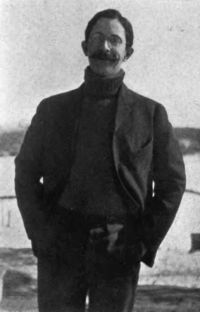
Portrait of Edwin Lefevre Edwin Lefevre Wall Street Stories — The Lost Opportunity (1916)

Nobody knew exactly how the enmity between Greener and Dittenhoeffer began. The “Little Napoleon of Railroading” had felt toward Dutch Dan a certain passive hostility for interference with sundry stock market deals. But Dan hated Greener madly, probably for the same reason that a hawk may have for hating a snake: the instinctive antipathy of the utterly dissimilar.
Scores of men had tried to “bust” Greener, but Greener had grown the richer by their efforts, the growth of his fortune being proportionate to the contraction of theirs.
Source: Wikisource

Portrait of Edwin Lefevre Edwin Lefevre Wall Street Stories — The Lost Opportunity (1916)

He could have taken Greener’s block of 50,000 shares and hurled it bodily at the market. Not even a gilt-edge stock could withstand the impact of such a fearful blow, and the price of Federal Telegraph doubtless would have broken 15 points or more, and he could easily have taken in his shorts at 75 or possibly even at 70—which would have meant a profit of a half-million of dollars—and a loss of a much needed million to his arch-foe, Greener.
Source: Wikisource

Portrait of Edwin Lefevre Edwin Lefevre Wall Street Stories — The Lost Opportunity (1916)

Just to show there was no need to hurry the “bull” or upward movement Dan sold the stock “short” every time Greener tried to advance the price. Four times did Greener try and four times Dittenhoeffer sold him a few thousand shares—just enough to check the advance. Up to a certain point a manipulator of stocks is successful. His manipulation may comprise many ingenious and complex actions and devices, but the elemental fact in bull manipulation is to buy more than the other fellow can or wishes to sell. Greener was willing to buy, but Dan was even more willing to sell.
Source: Wikisource

Get perspective with Kwize: daily news enlightened by great literature