Summary

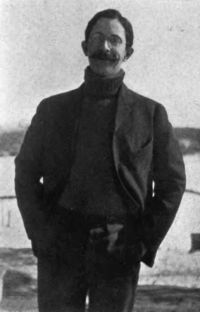
Portrait of Edwin Lefevre Edwin Lefevre Wall Street Stories — Pike’s Peak or Bust (1916)

The brokers liked him, and they “remembered” him at Christmas. The best memory was possessed by “Joe” Jacobs, who gave him $25, and insinuated that he would like to do more of Tracy & Middleton’s business than he had been getting.
“But,” said Sally, “the firm said I was to give the order to whichever broker I found first.”
“Well,” said Jacobs, oleaginously, “I am never too busy to take orders from such a nice young fellow as yourself, if you take the trouble to find me; and I’ll do something nice for you. Look here,” in a whisper, “if you give me plenty of business, I’ll give you $5 a week.”
Source: Wikisource

Portrait of Edwin Lefevre Edwin Lefevre Wall Street Stories — Pike’s Peak or Bust (1916)

He became friendly and even familiar with Tracy & Middleton’s clients, among whom were some very wealthy men, for a stock-broker’s office is a democratic place. Men who would not have dreamed of taking their Wall Street acquaintances to their homes or to their clubs for a million reasons, all but called each other by their first names there.
He really was a bright, amiable fellow, very obliging—he was paid for it by the firm—and he made the most of his opportunities. The customers grew to like him exceedingly well, and to think with respect of his judgment, market-wise.
Source: Wikisource

Portrait of Edwin Lefevre Edwin Lefevre Wall Street Stories — Pike’s Peak or Bust (1916)

William G. Dorr, shrewdest and boldest of all Western stock gamblers, fooled everybody—he actually told the truth. That week the directors did exactly as he had predicted. When a speculator of his calibre lies he fools only one half—the foolish half—of the Street. When he tells the truth he deceives everybody. Before Wall Street could recover from the shock the price of the stock was up 5 points, which meant that Hayward was out $25,000 on that deal alone.
Source: Wikisource

Get perspective with Kwize: daily news enlightened by great literature