Summary

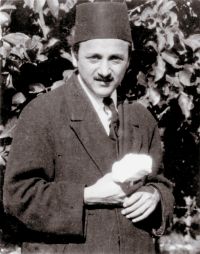
Portrait of Effendi Shoghi Effendi Shoghi Arohanui: Letters from Shoghi Effendi to New Zealand

I am touched by this expression of the loyalty and devotion of the Auckland Bahá’ís whose welfare, and spiritual advancement are the object of my earnest and constant prayer. I shall devote it to further the interests of the Cause in ways that are dearest and nearest to my heart. I shall supplicate the Almighty that strength and wisdom may be given you to face and overcome the obstacles and trials that you will inevitably encounter in future. The end is glorious if we only persevere.
Source: Gutenberg

Portrait of Effendi Shoghi Effendi Shoghi Arohanui: Letters from Shoghi Effendi to New Zealand

The three mottoes of education hold true in our case too. First grow, then become and then contribute. We have developed; we have established ourselves, and now it is time to contribute to others. We have inexhaustible capital. The candles of our spiritual lives constantly weep away their lives in shedding light to the world, but they never become exhausted. For there is connection between our lives and that of Bahá’u’lláh and our beloved ‘Abdu’l-Bahá.
It cannot be described how much we long to see our dear New Zealand brethren and sisters.
Source: Gutenberg

Portrait of Effendi Shoghi Effendi Shoghi Arohanui: Letters from Shoghi Effendi to New Zealand

What visiting teachers are supposed to do is to give the final touch to the work that has been done, to consolidate rather than supplement individual efforts and thereby direct them in a constructive and suitable channel. Their task is to encourage and inspire individual believers, and to broaden and deepen their vision of the task that is to be done. And this, not by virtue of any inherent spiritual right, but in the spirit of simple and whole-hearted cooperation.
It is in this light that Shoghi Effendi views the whole problem of teaching not only in New Zealand but in all the Bahá’í world.
Source: Gutenberg

Get perspective with Kwize: daily news enlightened by great literature