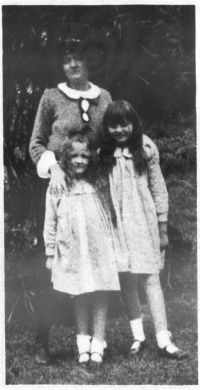
Elisabeth Sanxay Holding

Elisabeth Sanxay Holding

Summary

Portrait of Elisabeth Sanxay Holding Elisabeth Sanxay Holding Invincible Minnie — BOOK 1: Chapter 3 (1920)

So absolutely what it should be was Minnie’s attitude. She was worn and tired, her eyes reddened with crying, all of which rendered so touching her pleasantness and politeness, her willingness to answer questions. A womanly little soul, altogether. The old lady fancied she saw in her the amiable and domestic creature desired by all old people, the consolation of her age; youth with none of youth’s disadvantages, the sedateness, the responsibility of maturity with the vigour and charm proper to her twenty years. She acclaimed Minnie a paragon, a Phœnix among maidens.
Source: Wikisource

Portrait of Elisabeth Sanxay Holding Elisabeth Sanxay Holding Invincible Minnie — BOOK 1: Chapter 3 (1920)

She looked at Minnie’s obstinate, tear-stained face, and was filled with a great regret and a sort of loneliness.
“Oh, Minnie!” she cried. “Do try to understand a little! Don’t you see that I couldn’t bear a life like this?”
“There’s no use talking about it. Only, Frankie, don’t imagine it hasn’t been hard for me,” she answered. “After all, I suppose I am a human being.”
“I know it, darling, I’m awfully sorry for you!” Frances assured her contritely.
Minnie had a not very admirable trait of always pressing an advantage.
Source: Wikisource

Portrait of Elisabeth Sanxay Holding Elisabeth Sanxay Holding Invincible Minnie — BOOK 1: Chapter 3 (1920)

She respected herself but she respected others. She was devilishly proud, but she permitted pride in others. She was capable of admiring worth wherever found and was quite honest about it. She really did not stand upon her Defoeness. She had, it must be admitted, a fair share of young conceit; she believed herself to be handsome and intelligent and resolute, and these were her claims upon the world’s regard. Whereas Minnie, far more humble as an individual, demanded a slavish servility from the majority of mankind simply because she was what she called a “gentlewoman.”
Source: Wikisource

Get perspective with Kwize: daily news enlightened by great literature