Summary

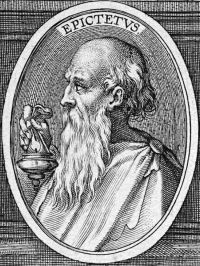
Portrait of Epictetus Epictetus Epictetus, the Discourses as reported by Arrian… (1925)

But take your own case, Epicurus; what more masterful faculty do you yourself possess? What is that thing within you which takes counsel, which examines into all things severally, which, after examining the flesh itself, decides that it is the principal matter? And why do you light a lamp and toil in our behalf, and write such quantities of books? Is it that we may not fail to know the truth? Who are we?
Source: Wikisource

Portrait of Epictetus Epictetus Epictetus, the Discourses as reported by Arrian… (1925)

Every art and faculty makes certain things the special object of its contemplation. Now when the art or faculty itself is of like kind with what it contemplates, it becomes inevitably self-contemplative; but when it is of unlike kind, it cannot contemplate itself. For example, the art of leather-working has to do with hides, but the art itself is altogether different from the material of hides, wherefore it is not self-contemplative.
Source: Wikisource

Portrait of Epictetus Epictetus Epictetus, the Discourses as reported by Arrian… (1925)

Ask, "What, then, is God, and what is an external impression? And what is nature in the individual and nature in the universe?" You already have a lengthy statement. If Epicurus should come and say that the good ought to be in the flesh, again the explanation becomes lengthy, and you must be told what is the principal faculty within us, and what our substantial, and what our essential, nature is. Since it is not probable that the good of a snail lies in its shell, is it, then, probable that the good of man lies in his flesh?
Source: Wikisource

Get perspective with Kwize: daily news enlightened by great literature