Summary

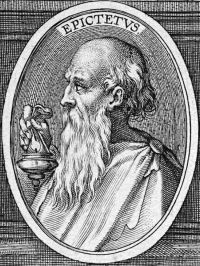
Portrait of Epictetus Epictetus Epictetus, the Discourses as reported by Arrian… (1925)

Why shall one man envy another? Why shall he admire those who have great possessions, or those who are stationed in places of power, especially if they be both strong and prone to anger? For what will they do to us? As for what they have power to do, we shall pay no heed thereto; as for the things we care about, over them they have no power. Who, then, will ever again be ruler over the man who is thus disposed?
How did Socrates feel with regard to these matters? Why, how else than as that man ought to feel who has been convinced that he is akin to the gods?
Source: Wikisource

Portrait of Epictetus Epictetus Epictetus, the Discourses as reported by Arrian… (1925)

Why should he not call himself a son of God? And why shall he fear anything that, happens among men? What? Shall kinship with Caesar or any other of them that have great power at Rome be sufficient to enable men to live securely, proof against contempt, and in fear of nothing whatsoever, but to have God as our maker, and father, and guardian,—shall this not suffice to deliver us from griefs and fears?—And wherewithal shall I be fed, asks one, if I have nothing?—And how of slaves, how of runaways, on what do they rely when they leave their masters?
Source: Wikisource

Portrait of Epictetus Epictetus Epictetus, the Discourses as reported by Arrian… (1925)

How from the thesis that we are akin to God may a man proceed to the consequences?
If what is said by the philosophers regarding the kinship of God and men be true, what other course remains for men but that which Socrates took when asked to what country he belonged, never to say "I am an Athenian," or "I am a Corinthian," but "I am a citizen of the universe"? For why do you say that you are an Athenian, instead of mentioning merely that corner into which your paltry body was cast at birth?
Source: Wikisource

Get perspective with Kwize: daily news enlightened by great literature