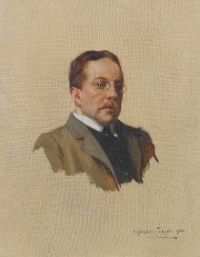
Ernest William Hornung

Ernest William Hornung

Summary

Portrait of Ernest William Hornung Ernest William Hornung A Bride from the Bush — XII (1890)

Woman of infinite sweetness though she was, Lady Bligh was mortal, not divine; and she showed her clay by speaking very plainly indeed, as the carriage swept out of the Park, and by speaking no more (to Gladys) that day. A good deal of cant is current about people whose anger is violent ('while it lasts') , but short-lived ('he gets over it in a moment') ; but it is difficult to believe in those people. If there be just cause for wrath, with or without violence, it is not in reason that you can be in a rollicking good humour the next minute.
Source: Wikisource

Portrait of Ernest William Hornung Ernest William Hornung A Bride from the Bush — XII (1890)

Lady Bligh, with all her virtues, could nurse the genuine passion—an infant that thrives at the breast. Indeed, it is probable that before the end of the silent drive to Twickenham (Alfred never opened his clenched teeth all the way) this thoroughly good woman positively detested the daughter whom she had just learnt to love. For it is a fallacy to suppose that the pepper-and-salt emotion of love and hatred in equal parts is the prerogative of lovers; you will find it oftener in the family.
What penitence Gladys had expressed had been lame—crippled by an excuse.
Source: Wikisource

Portrait of Ernest William Hornung Ernest William Hornung A Bride from the Bush — XII (1890)

But if the people are not only well-to-do, but well and honourably known, and relatives by your marriage, who have been more than kind to you, you could scarcely expect a facile pardon. Sincerity apart, they would be more than mortal if they so much as pretended to forgive you out of hand, and little less than divine if they did not tell you at once what they thought of you, and thereafter ignore you until time healed their wounds.
Source: Wikisource

Get perspective with Kwize: daily news enlightened by great literature