Summary

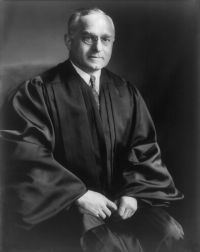
Portrait of Felix Frankfurter Felix Frankfurter Cory Corporation v. Sauber — Dissent

It was stipulated that each unit had over one actual horsepower, but a manufacturer's rating of three-fourths horsepower. The Government contended that an interpretation that actual horsepower applied would make the rulings 'fly in the face of the statute.' It argued that the ruling should be interpreted 'in (consonance) with the statute so as not to require the Court to strike down the ruling as a nullity and as something that is unreasonable, void, and of no effect.' [1] This, the Government asserted, required that 'total motor horsepower' be interpreted as manufacturer's rated horsepower.
Source: Wikisource

Portrait of Felix Frankfurter Felix Frankfurter Cory Corporation v. Sauber — Dissent

Whether or not a case is feigned must ultimately turn on inferences from the record and history of a litigation. The appearance that it may be, even if not demonstrably calling for dismissal of the proceeding, ought to make the Court doubly unwilling to give its judgment on the substantive questions to be dug out of so dubious a litigation on such a record.
Source: Wikisource

Portrait of Felix Frankfurter Felix Frankfurter Cory Corporation v. Sauber — Dissent

In this connection, no one seems to know to what extent the tax has been collected by the industry. Petitioners now seem to admit that they made substantial collections, and the record discloses that other major manufacturers determined 'taxability * * * by reference to rated horsepower, whether or not the actual horsepower was different therefrom.' It therefore appears that large sums of money have been collected and are now being retained by the manufacturers. This case is based on only two units, purchased by persons connected with the petitioners.
Source: Wikisource

Get perspective with Kwize: daily news enlightened by great literature