Summary

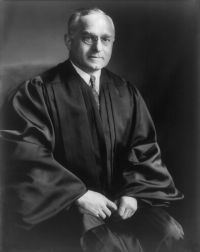
Portrait of Felix Frankfurter Felix Frankfurter Lane v. Wilson — Opinion of the Court

Unfair discrimination was thus retained by automatically granting voting privileges for life to the white citizens whom the constitutional 'grandfather clause' had sheltered while subjecting colored citizens to a new burden. The practical effect of the 1916 legislation was to accord to the members of the negro race who had been discriminated against in the outlawed registration system of 1914, not more than 12 days within which to reassert constitutional rights which this Court found in the Guinn case to have been improperly taken from them.
Source: Wikisource

Portrait of Felix Frankfurter Felix Frankfurter Lane v. Wilson — Opinion of the Court

The Fifteenth Amendment secures freedom from discrimination on account of race in matters affecting the franchise. Whosoever 'under color of any statute' subjects another to such discrimination thereby deprives him of what the Fifteenth Amendment secures and, under Section 1979 becomes 'liable to the party injured in an action at law.' The theory of the plaintiff's action is that the defendants, acting under color of Section 5654, did discriminate against him because that Section inherently operates discriminatorily.
Source: Wikisource

Portrait of Felix Frankfurter Felix Frankfurter Lane v. Wilson — Opinion of the Court

The Amendment nullifies sophisticated as well as simple-minded modes of discrimination. It hits onerous procedural requirements which effectively handicap exercise of the franchise by the colored race although the abstract right to vote may remain unrestricted as to race. When in Guinn v. United States, supra, the Oklahoma 'grandfather clause' was found violative of the Fifteenth Amendment, Oklahoma was confronted with the serious task of devising a new registration system consonant with her own political ideas but also consistent with the Federal Constitution.
Source: Wikisource

Get perspective with Kwize: daily news enlightened by great literature