Summary

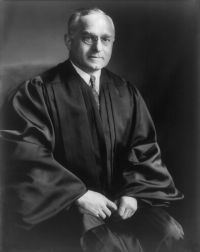
Portrait of Felix Frankfurter Felix Frankfurter Rochin v. California — Opinion of the Court (1952)

The Court's function in the observance of this settled conception of the Due Process Clause does not leave us without adequate guides in subjecting State criminal procedures to constitutional judgment. In dealing not with the machinery of government but with human rights, the absence of formal exactitude, or want of fixity of meaning, is not an unusual or even regrettable attribute of constitutional provisions. Words being symbols do not speak without a gloss. On the one hand the gloss may be the deposit of history, whereby a term gains technical content.
Source: Wikisource

Portrait of Felix Frankfurter Felix Frankfurter Rochin v. California — Opinion of the Court (1952)

To believe that this judicial exercise of judgment could be avoided by freezing 'due process of law' at some fixed stage of time or thought is to suggest that the most important aspect of constitutional adjudication is a function for inanimate machines and not for judges, for whom the independence safeguarded by Article III of the Constitution was designed and who are presumably guided by established standards of judicial behavior.
Source: Wikisource

Portrait of Felix Frankfurter Felix Frankfurter Rochin v. California — Opinion of the Court (1952)

Coerced confessions offend the community's sense of fair play and decency. So here, to sanction the brutal conduct which naturally enough was condemned by the court whose judgment is before us, would be to afford brutality the cloak of law. Nothing would be more calculated to discredit law and thereby to brutalize the temper of a society.
In deciding this case we do not heedlessly bring into question decisions in many States dealing with essentially different, even if related, problems.
Source: Wikisource

Get perspective with Kwize: daily news enlightened by great literature