Summary

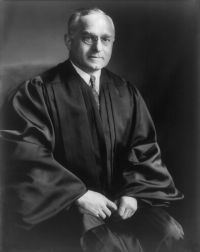
Portrait of Felix Frankfurter Felix Frankfurter Rogers v. Richmond (365 U.S. 534…

Our decisions under that Amendment have made clear that convictions following the admission into evidence of confessions which are involuntary, i.e., the product of coercion, either physical or psychological, cannot stand. This is so not because such confessions are unlikely to be true but because the methods used to extract them offend an underlying principle in the enforcement of our criminal law:
Source: Wikisource

Portrait of Felix Frankfurter Felix Frankfurter Rogers v. Richmond (365 U.S. 534…

It is not for this Court, any more than for a Federal District Court, in habeas corpus proceedings, to make an independent appraisal of the legal significance of facts gleaned from the record after such a conviction. We are barred from speculating-it would be an irrational process-about the weight attributed to the impermissible consideration of truth and falsity which, entering into the Connecticut trial court's deliberations concerning the admissibility of the confessions, may well have distorted, by putting in improper perspective, even its findings of historical fact.
Source: Wikisource

Get perspective with Kwize: daily news enlightened by great literature