Summary

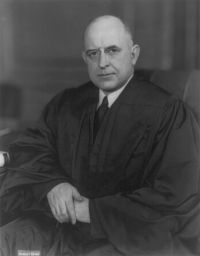
Portrait of Stanley Forman Reed Stanley Forman Reed Lyons v. Oklahoma — Opinion of the Court

A coerced confession is offensive to basic standards of justice, not because the victim has a legal grievance against the police, but because declarations procured by torture are not premises from which a civilized forum will infer guilt. The Fourteenth Amendment does not provide review of mere error in jury verdicts, even though the error concerns the voluntary character of a confession. We cannot say that an inference of guilt based in part upon Lyons' McAlester confession is so illogical and unreasonable as to deny the petitioner a fair trial.
Source: Wikisource

Portrait of Stanley Forman Reed Stanley Forman Reed Lyons v. Oklahoma — Opinion of the Court

To conclude that the brutality inflicted at the time of the first confession suddenly lost all of its effect in the short space of twelve hours is to close one's eyes to the realities of human nature. An individual does not that easily forget the type of torture that accompanied petitioner's previous refusal to confess, nor does a person like petitioner so quickly recover from the gruesome effects of having had a pan of human bones placed on his knees in order to force incriminating testimony from him.
Source: Wikisource

Portrait of Stanley Forman Reed Stanley Forman Reed Lyons v. Oklahoma — Opinion of the Court

The effect of earlier abuse may be so clear as to forbid any other inference than that it dominated the mind of the accused to such an extent that the later confession is involuntary. If the relation between the earlier and later confession is not so close that one must say the facts of one control the character of the other, the inference is one for the triers of fact and their conclusion, in such an uncertain situation, that the confession should be admitted as voluntary, cannot be a denial of due process.
Source: Wikisource

Get perspective with Kwize: daily news enlightened by great literature