Summary

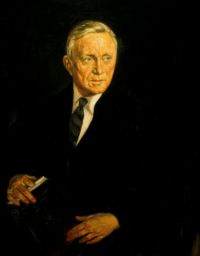
Portrait of William O. Douglas William O. Douglas Garrity v. New Jersey — Opinion of the Court

Lamm, The 5th Amendment and Its Equivalent in Jewish Law, 17 Decalogue Jour. 1 (Jan.-Feb.1967) :
'It should be pointed out, at the very outset, that the Halakhah does not distinguish between voluntary and forced confessions, for reasons which will be discussed later. And it is here that one of the basic differences between Constitutional and Talmudic Law arises. According to the Constitution, a man cannot be compelled to testify against himself. The provision against self-incrimination is a privilege of which a citizen may or may not avail himself, as he wishes.
Source: Wikisource

Portrait of William O. Douglas William O. Douglas Garrity v. New Jersey — Opinion of the Court

Where the choice is 'between the rock and the whirlpool,' duress is inherent in deciding to 'waive' one or the other.
'It always is for the interest of a party under duress to choose the lesser of two evils. But the fact that a choice was made according to interest does not exclude duress. It is the characteristic of duress properly so called.' Ibid.
In that case appellant paid under protest. In these cases also, though petitioners succumbed to compulsion, they preserved their objections, raising them at the earliest possible point.
Source: Wikisource

Get perspective with Kwize: daily news enlightened by great literature