Summary

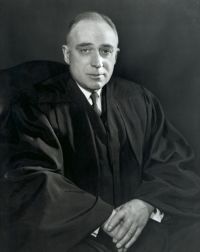
Portrait of John Marshall Harlan II John Marshall Harlan II Cohen v. Hurley — Opinion of the Court

There seems to be no reason whatever, however, for straining the meaning of due process of law to include this privilege within it, because, perhaps, we may think it of great value. The States had guarded the privilege to the satisfaction of their own people up to the adoption of the Fourteenth Amendment. No reason is perceived why they cannot continue to do so. The power of their people ought not to be fettered, their sense of responsibility lessened, and their capacity for sober and restrained self-government weakened, by forced construction of the Federal Constitution.
Source: Wikisource

Portrait of John Marshall Harlan II John Marshall Harlan II Cohen v. Hurley — Opinion of the Court

Not only is the practice of such judicial investigations long-established, but the subject matter of the present investigation does not lack a rational basis. It is no less true than trite that lawyers must operate in a three-fold capacity, as self-employed businessmen as it were, as trusted agents of their clients, and as assistants to the court in search of a just solution to disputes.
Source: Wikisource

Portrait of John Marshall Harlan II John Marshall Harlan II Cohen v. Hurley — Opinion of the Court

We do not hold that lawyers, because of their special status in society, can therefore be deprived of constitutional rights assured to others, but only, as in all cases of this kind, that what procedures are fair, what state process is constitutionally due, what distinctions are consistent with the right to equal protection, all depend upon the particular situation presented, and that history is surely relevant to these inquiries.
Source: Wikisource

Get perspective with Kwize: daily news enlightened by great literature