Summary

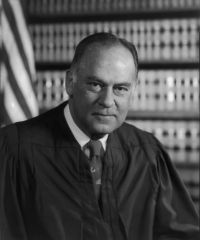
Portrait of Potter Stewart Potter Stewart Tehan v. United States ex rel. Shott…

New Jersey, all the States have by their own law respected these basic purposes by extending the protection of the testimonial privilege against self-incrimination to every defendant tried in their criminal courts. In Twining the Court noted that 'all the states of the Union have, from time to time, with varying form, but uniform meaning, included the privilege in their Constitutions, except the states of New Jersey and Iowa, and in those States it is held to be part of the existing law.' 211 U.S., at 92, 29 S.Ct.
Source: Wikisource

Portrait of Potter Stewart Potter Stewart Tehan v. United States ex rel. Shott…

Article I, § 10 of the Constitution of Ohio provides, in part, as follows: 'No person shall be compelled, in any criminal case, to be a witness against himself; but his failure to testify may be considered by the court and jury and may be the subject of comment by counsel.'↑ The Supreme Court of California and the Supreme Court of Ohio have both considered the question, and each court has unanimously held that under the controlling principles discussed in Linkletter v. Walker, 381 U.S. 618, 85 S.Ct. 1731, 14 L.Ed.2d 601, the Griffin rule is not to be applied retroactively in those States.
Source: Wikisource

Portrait of Potter Stewart Potter Stewart Tehan v. United States ex rel. Shott…

It is not in every criminal trial that tangible evidence of a kind that might raise Mapp issues is offered. But it may fairly be assumed that there has been comment in every single trial in the courts of California, Connecticut, Iowa, New Jersey, New Mexico, and Ohio, in which the defendant did not take the witness stand-in accordance with state law and with the United States Constitution as explicitly interpreted by this Court for 57 years.
Source: Wikisource

Get perspective with Kwize: daily news enlightened by great literature