Summary

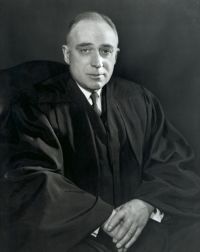
Portrait of John Marshall Harlan II John Marshall Harlan II Cicenia v. La Gay — Opinion of the Court

On the one hand, it is indisputable that the right to counsel in criminal cases has a high place in our scheme of procedural safeguards. On the other hand, it can hardly be denied that adoption of petitioner's position would constrict state police activities in a manner that in many instances might impair their ability to solve difficult cases. A satisfactory formula for reconciling these competing concerns is not to be found in any broad pronouncement that one must yield to the other in all instances.
Source: Wikisource

Portrait of John Marshall Harlan II John Marshall Harlan II Cicenia v. La Gay — Opinion of the Court

An independent examination of the record satisfies us that the District Court was justified in concluding that petitioner failed to substantiate the charge that his confession was coerced. Petitioner does not now contend to the contrary. He continues to contend, however, that under the Fourteenth Amendment his confession, even though voluntary, was nevertheless vitiated by police refusal to permit him to confer with counsel during his detention at Newark police headquarters, and that because his plea of non vult was based on the confession, the conviction must fall as well.
Source: Wikisource

Portrait of John Marshall Harlan II John Marshall Harlan II Cicenia v. La Gay — Opinion of the Court

It is well known that law-enforcement problems vary widely from State to State, as well as among different communities within the same State. This Court has often recognized that it is of the 'very essence of our federalism that the States should have the widest latitude in the administration of their own systems of criminal justice.' Hoag v.
Source: Wikisource

Get perspective with Kwize: daily news enlightened by great literature