Summary

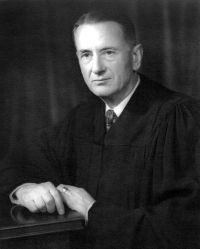
Portrait of Charles Evans Whittaker Charles Evans Whittaker Payne v. Arkansas — Opinion of the Court

Enforcement of the criminal laws of the States rests principally with the state courts, and generally their findings of fact, fairly made upon substantial and conflicting testimony as to the circumstances producing the contested confession-as distinguished from inadequately supported findings or conclusions drawn from uncontroverted happenings-are not this Court's concern; [2] yet where the claim is that the prisoner's confession is the product of coercion we are bound to make our own examination of the record to determine whether the claim is meritorious.
Source: Wikisource

Portrait of Charles Evans Whittaker Charles Evans Whittaker Payne v. Arkansas — Opinion of the Court

The jury returned a general verdict finding petitioner guilty of first degree murder as charged and assessed the penalty of death by electrocution. Judgment accordingly was entered on the verdict.
That petitioner was not physically tortured affords no answer to the question whether the confession was coerced, for ' (t) here is torture of mind as well as body; the will is as much affected by fear as by force. * * * A confession by which life becomes forfeit must be the expression of free choice.' Watts v.
Source: Wikisource

Portrait of Charles Evans Whittaker Charles Evans Whittaker Payne v. Arkansas — Opinion of the Court

It is therefore unnecessary at this time for us to discuss or decide the other question presented by petitioner-whether the overruling of his motion to quash the panel of petit jurors upon the ground that Negroes were systematically excluded, or their number limited, in the selection of the jury panel denied him the equal protection of the laws under the Fourteenth Amendment-for we will not assume that the same issue will be present upon a new trial.
Source: Wikisource

Get perspective with Kwize: daily news enlightened by great literature