Summary

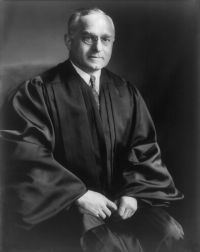
Portrait of Felix Frankfurter Felix Frankfurter Scripps-Howard Radio v. Federal Communications Commission…

We conclude that Congress by § 402 (b) of the Communications Act of 1934 has not deprived the Court of Appeals of the power to stay-a power as old as the judicial system of the nation. We do not of course go beyond the question put to us. We merely recognize the existence of the power to grant a stay. We are not concerned here with the criteria which should govern the Court in exercising that power. Nor do we in any way imply that a stay would or would not be warranted upon the showing made by the appellant in this case.
Source: Wikisource

Portrait of Felix Frankfurter Felix Frankfurter Scripps-Howard Radio v. Federal Communications Commission…

That a court is called upon to enforce public rights and not the interests of private property does not diminish its power to protect such rights. 'Courts of equity may, and frequently do, go much farther both to give and withhold relief in furtherance of the public interest than they are accustomed to go when only private interests are involved.' Virginian Ry.
Source: Wikisource

Portrait of Felix Frankfurter Felix Frankfurter Scripps-Howard Radio v. Federal Communications Commission…

But it is said that Congress entrusted the vindication of the public interest to private litigants. The Sanders case properly construed merely means that the Court of Appeals has jurisdiction of appeals by a 'person aggrieved' or by one 'whose interests are adversely affected' by the Commission's decision. § 402 (b) . But that does not mean that an appellant has a cause of action merely because he has a competing station. Unless he can show that his individual interest has been unlawfully invaded, there is merely damnum absque injuria and no cause of action on the merits.
Source: Wikisource

Get perspective with Kwize: daily news enlightened by great literature