Summary

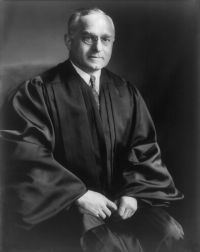
Portrait of Felix Frankfurter Felix Frankfurter United States Chapman v. Federal Power Commission…

Congress was of course aware that, by granting a license to private enterprise, the Federal Power Commission would not commit the site permanently to private development and preclude all further congressional action. The Commission would, as it did here, simply express its judgment that, at the time, private development of the site was consistent with the general conception of the way in which the Roanoke River Basin should be developed.
Source: Wikisource

Portrait of Felix Frankfurter Felix Frankfurter United States Chapman v. Federal Power Commission…

Section 7 (b) is a direction to the Commission not to approve a private application for a project 'affecting' any development of water resources which, in the judgment of the Commission, should be undertaken by the United States itself. Petitioners in effect ask us to tell the Commission what it thought-to say to the Commission that it was its judgment that Roanoke Rapids, as well as all the other seven projects in the Roanoke plan not yet under consideration, should be built by the Government.
Source: Wikisource

Portrait of Felix Frankfurter Felix Frankfurter United States Chapman v. Federal Power Commission…

For the Roanoke River Basin itself, although Buggs Island and Philpott were specifically 'authorized' in the Flood Control Act of 1944, separate steps were taken by Congress to complete the authorization; 'planning money' was appropriated, a 'Definite Project Report' was received for Buggs Island, and then funds for construction of Buggs Island were appropriated. Equally illuminating is the procedure by which Congress recently set in motion plans to build a project 'approved' exactly as was the Roanoke Rapids project.
Source: Wikisource

Get perspective with Kwize: daily news enlightened by great literature