Summary

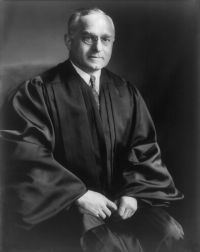
Portrait of Felix Frankfurter Felix Frankfurter United States v. Central Eureka Mining Company…

Since a court of the United States may properly decide a constitutional question only if the case cannot fairly be disposed of on a non-constitutional basis, any statutory question that is not frivolous should be met and disposed of before questions requiring construction of the Constitution are reached. The reason for the Court of Claims' failure to heed this fundamental rule can only be surmised. This litigation was initiated before the Act of July 14, 1952, had been passed by Congress and was framed exclusively in constitutional terms.
Source: Wikisource

Portrait of Felix Frankfurter Felix Frankfurter United States v. Central Eureka Mining Company…

The Act of July 14, 1952, is but one of many special jurisdictional statutes passed from time to time by Congress, and a number of these have been construed by the Court of Claims. An examination of these cases tends to corroborate the conclusion that the wording of the statute provides little clue to its judicially ascertainable meaning. The phrase 'to hear, determine, and render judgment * * * on the claim,' or an approximate equivalent, is common to most special jurisdictional statutes, including many that have been held to do no more than waive limited defenses.
Source: Wikisource

Portrait of Felix Frankfurter Felix Frankfurter United States v. Central Eureka Mining Company…

It is no more admissible that a statute's passage virtually without debate and from a bill on the consent calendar should reflect on its weight than that a decision of this Court should be given less weight because it was argued on the summary docket. There is no reason to suppose that this legislation did not receive the careful study that the committees in their reports claim to have given it.
Source: Wikisource

Get perspective with Kwize: daily news enlightened by great literature