Summary

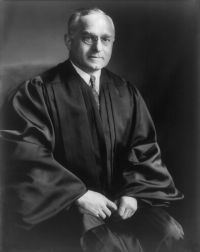
Portrait of Felix Frankfurter Felix Frankfurter United States v. Fleischman — Dissent

If language in a criminal statute is to be read with the normal meaning of English speech, 'willfully makes default' surely conveys the thought of a substantial tie between the non-production of papers and the non-action to which it is attributed. This record is barren of the proof which under our system of punitive justice would have warranted a jury to find that respondent was actively or passively responsible for the non-production of the papers she was asked to produce.
Source: Wikisource

Portrait of Felix Frankfurter Felix Frankfurter United States v. Fleischman — Dissent

But regard for that power does not call for the slightest relaxation of the requirements of our criminal process. A penal statute must not be applied beyond its terms, and the crime defined by it and charged in an indictment must be established by proof beyond a reasonable doubt.
It may well be that the House committee should have asked respondent to try to have convened a meeting of the executive board with a view to asking the custodian of the records to produce them.
Source: Wikisource

Portrait of Felix Frankfurter Felix Frankfurter United States v. Fleischman — Dissent

Any one who 'willfully makes default' in obeying a valid subpoena to produce records before a committee of Congress has, ever since 1857, been guilty of a federal offense. Act of January 24, 1857, 11 Stat. 155; R.S. § 102, as amended by Joint Resolution of June 22, 1938, 52 Stat. 942, now 2 U.S.C. § 192, 2 U.S.C.A. § 192. This was the offense for which respondent was prosecuted.
Source: Wikisource

Get perspective with Kwize: daily news enlightened by great literature