Summary

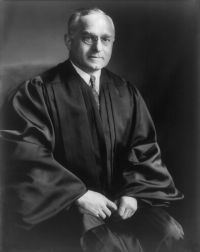
Portrait of Felix Frankfurter Felix Frankfurter Zorach v. Clauson — Dissent

There is all the difference in the world between letting the children out of school and letting some of them out of school into religious classes. If every one is free to make what use he will of time wholly unconnected from schooling required by law-those who wish sectarian instruction devoting it to that purpose, those who have ethical instruction at home, to that, those who study music, to that-then of course there is no conflict with the Fourteenth Amendment.
Source: Wikisource

Portrait of Felix Frankfurter Felix Frankfurter Zorach v. Clauson — Dissent

The pith of the case is that formalized religious instruction is substituted for other school activity which those who do not participate in the released-time program are compelled to attend. The school system is very much in operation during this kind of released time. If its doors are closed, they are closed upon those students who do not attend the religious instruction, in order to keep them within the school. That is the very thing which raises the constitutional issue. It is not met by disregarding it. Failure to discuss this issue does not take it out of the case.
Source: Wikisource

Portrait of Felix Frankfurter Felix Frankfurter Zorach v. Clauson — Dissent

Board of Education, 333 U.S. 203, 226, 68 S.Ct. 461, 472, 92 L.Ed. 249, to 'emphasize the importance of detailed analysis of the facts to which the Constitutional test of Separation is to be applied', they denied that opportunity on the ground that such proof was irrelevant to the issue of constitutionality. See 198 Misc. 631, 641, 99 N.Y.S.2d 339, 348 349; 303 N.Y. 161, 174-175, 100 N.E.2d 463, 469. [1]
When constitutional issues turn on facts, it is a strange procedure indeed not to permit the facts to be established.
Source: Wikisource

Get perspective with Kwize: daily news enlightened by great literature