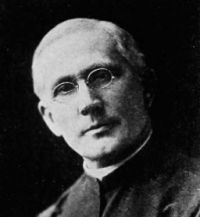
Florentine Stanislaus Bechtel

Florentine Stanislaus Bechtel

Summary

Portrait of Florentine Stanislaus Bechtel Florentine Stanislaus Bechtel,  Catholic Encyclopedia (1913)

“ Ambarach, Peter (also called Benedictus and Benedetti, these names being the equivalents of the Arabic ambarak "blessed") , a Maronite Orientalist, b. at Gusta, Syria, June, 1663; d. in Rome, 25 August, 1742. He was educated by the Jesuits in the Maronite college in Rome, 1672–85, and on his return to Syria in the latter year was ordained priest. Having been sent to Rome on business concerning the Maronite Church, he was requested by Cosmo III de Medici to organize an Oriental printing establishment at Florence, and then was given the chair of Hebrew at Pisa. ”
Source: Wikisource

Portrait of Florentine Stanislaus Bechtel Florentine Stanislaus Bechtel,  Catholic Encyclopedia (1913)

“ Alabaster (Gr. ἀλάβαστρος,–ον; Lat. alabaster, -trum; of uncertain origin) . The substance commonly known as alabaster is a fine-grained variety of gypsum (calcium sulphate) much used for vases and other ornamental articles. Oriental alabaster, the alabastrites of the classical writers, is a translucent marble (calcium carbonate) obtained from stalagmitic deposits; because of its usually banded structure, which gives it some resemblance to onyx, it is also called onyx marble, or simply, though incorrectly, onyx. From remote times it was highly esteemed for decorative purposes. ”
Source: Wikisource

Portrait of Florentine Stanislaus Bechtel Florentine Stanislaus Bechtel,  Catholic Encyclopedia (1913)

“ He was professor of Hebrew in the Roman College, and later succeeded Cardinal Tolomei in the chair of controversy. His knowledge of Hebrew is shown by his Hebrew translation of a homily of Pope Clement XI. He is the author of a number of dissertations on Scriptural subjects, mostly chronological, which were highly thought of. Sommorvogel enumerates fourteen, chief among which are: (1) "Dissertatio Biblica in quâ Scripturæ textus aliquot insigniores, adhibitis Unguis hebræa, syriaca, chaldaica, arabica, græca, ... dilucidantur" (Rome, 1704) ”
Source: Wikisource

Get perspective with Kwize: daily news enlightened by great literature