Summary

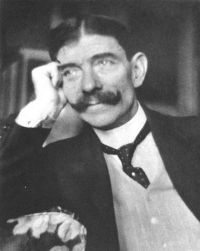
Portrait of Frank Harris Frank Harris Elder Conklin and Other Stories

When she saw Bancroft trying to draw Barkman out and throw contempt upon him, she never dreamed of objecting. But when he attacked her, she flew to her weapons. What had she done, what was she doing, to deserve his sneers? She only wished him to love her, and she felt indignantly that every time she teased him by going with Barkman, he was merciless, and whenever she abandoned herself to him, he drew back. She couldn't bear that; it was cruel of him. She loved him, yes; no one, she knew, would ever make him so good a wife as she would. No one ever could.
Source: Gutenberg

Portrait of Frank Harris Frank Harris Elder Conklin and Other Stories

The Elder had sacrificed his principles; had done violence to the habits of his life, and shame to his faith and practice—all in order that his daughter might have her “pianner.” The grotesque pronunciation of the word appeared pathetic to Bancroft now; it brought moisture into his eyes. What a fine old fellow Conklin was! Of course he wished to bear the whole burden of his sin and its punishment. It would be easy to go to him on the morrow and beg his pardon. Wrong done as the Elder did it, he felt, was more than right. What a Christian at heart! And what a man!
Source: Gutenberg

Portrait of Frank Harris Frank Harris Elder Conklin and Other Stories

What expression this sentiment would have found it is impossible to say, for just then Bill Hitchcock observed with a sneer:
“As he's run, I may as well walk;” and he stepped towards the bar-room.
Instantly Crocker threw himself in front of him with his face on fire.
“Walk—will ye?” he burst out, the long-repressed rage flaming up—“walk! when you've jumped the best man in Garotte—walk! No, by God, you'll crawl, d'ye hear? crawl—right out of this camp, right now!” and he dropped his revolver on Hitchcock's breast.
Source: Gutenberg

Get perspective with Kwize: daily news enlightened by great literature