Summary

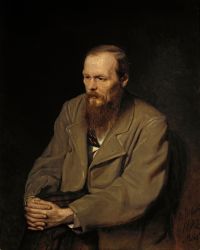
Portrait of Fyodor Dostoevsky Fyodor Dostoevsky The Brothers Karamazov — Part I, Book II, Chapter 3 (1880)

There is silent and long-suffering sorrow to be met with among the peasantry. It withdraws into itself and is still. But there is a grief that breaks out, and from that minute it bursts into tears and finds vent in wailing. This is particularly common with women. But it is no lighter a grief than the silent. Lamentations comfort only by lacerating the heart still more. Such grief does not desire consolation. It feeds on the sense of its hopelessness. Lamentations spring only from the constant craving to re-open the wound.
Source: Wikisource

Portrait of Fyodor Dostoevsky Fyodor Dostoevsky The Brothers Karamazov — Part I, Book II, Chapter 3 (1880)

I will remember him, mother, and your grief in my prayers, and I will pray for your husband's health. It is a sin for you to leave him. Your little one will see from heaven that you have forsaken his father, and will weep over you. Why do you trouble his happiness? He is living, for the soul lives for ever, and though he is not in the house he is near you, unseen. How can he go into the house when you say that the house is hateful to you?
Source: Wikisource

Portrait of Fyodor Dostoevsky Fyodor Dostoevsky The Brothers Karamazov — Part I, Book II, Chapter 3 (1880)

Consolation is not what you need. Weep and be not consoled, but weep. Only every time that you weep be sure to remember that your little son is one of the angels of God, that he looks down from there at you and sees you, and rejoices at your tears, and points at them to the Lord God; and a long while yet will you keep that great mother's grief. But it will turn in the end into quiet joy, and your bitter tears will be only tears of tender sorrow that purifies the heart and delivers it from sin.
Source: Wikisource

Get perspective with Kwize: daily news enlightened by great literature