Summary

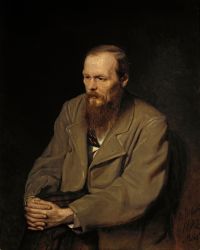
Portrait of Fyodor Dostoevsky Fyodor Dostoevsky The Brothers Karamazov — Part IV, Book XII, Chapter 8 (1880)

But what do we see? As soon as he is arrested the prisoner instantly throws all the blame on Smerdyakov, not accusing him of being his accomplice, but of being himself the murderer. 'He did it alone,' he says. 'He murdered and robbed him. It was the work of his hands.' Strange sort of accomplices who begin to accuse one another at once! And think of the risk for Karamazov. After committing the murder while his accomplice lay in bed, he throws the blame on the invalid, who might well have resented it and in self-preservation might well have confessed the truth.
Source: Wikisource

Portrait of Fyodor Dostoevsky Fyodor Dostoevsky The Brothers Karamazov — Part IV, Book XII, Chapter 8 (1880)

What's more, Smerdyakov at the inquiry volunteered the statement that it was he who had told the prisoner of the envelope of notes and of the signals, and that, but for him, he would have known nothing about them. If he had really been a guilty accomplice, would he so readily have made this statement at the inquiry? On the contrary, he would have tried to conceal it, to distort the facts or minimise them. But he was far from distorting or minimising them. No one but an innocent man, who had no fear of being charged with complicity, could have acted as he did.
Source: Wikisource

Portrait of Fyodor Dostoevsky Fyodor Dostoevsky The Brothers Karamazov — Part IV, Book XII, Chapter 8 (1880)

In this condition he suddenly heard of Smerdyakov's death, and at once reflected. 'The man is dead, I can throw the blame on him and save my brother. I have money. I will take a roll of notes and say that Smerdyakov gave them me before his death.' You will say that was dishonourable: it's dishonourable to slander even the dead, and even to save a brother.
Source: Wikisource

Get perspective with Kwize: daily news enlightened by great literature