Summary

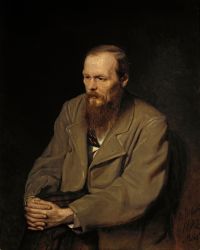
Portrait of Fyodor Dostoevsky Fyodor Dostoevsky The Brothers Karamazov — Part IV, Book XII, Chapter 12 (1880)

But why, why, asks the prosecutor, did not Smerdyakov confess in his last letter? Why did his conscience prompt him to one step and not to both? But, excuse me, conscience implies penitence, and the suicide may not have felt penitence, but only despair. Despair and penitence are two very different things. Despair may be vindictive and irreconcilable, and the suicide, laying his hands on himself, may well have felt redoubled hatred for those whom he had envied all his life.
Source: Wikisource

Portrait of Fyodor Dostoevsky Fyodor Dostoevsky The Brothers Karamazov — Part IV, Book XII, Chapter 12 (1880)

What troubles me and makes me indignant is that of all the mass of facts heaped up by the prosecution against the prisoner, there is not a single one certain and irrefutable. And yet the unhappy man is to be ruined by the accumulation of these facts. Yes, the accumulated effect is awful: the blood, the blood dripping from his fingers, the bloodstained shirt, the dark night resounding with the shout 'Parricide!' and the old man falling with a broken head.
Source: Wikisource

Portrait of Fyodor Dostoevsky Fyodor Dostoevsky The Brothers Karamazov — Part IV, Book XII, Chapter 12 (1880)

To kill the old man, take the three thousand, and throw all the blame on to his young master. A terrible lust of money, of booty, might seize upon him as he realised his security from detection. Oh! these sudden and irresistible impulses come so often when there is a favourable opportunity, and especially with murderers who have had no idea of committing a murder beforehand. And Smerdyakov may have gone in and carried out his plan.
Source: Wikisource

Get perspective with Kwize: daily news enlightened by great literature