Summary

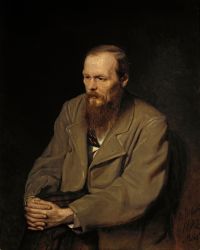
Portrait of Fyodor Dostoevsky Fyodor Dostoevsky The Brothers Karamazov — Part IV, Book XII, Chapter 9 (1880)

Yes, but there is something else, gentlemen of the jury, something that cries out in the soul, throbs incessantly in the mind, and poisons the heart unto death- that something is conscience, gentlemen of the jury, its judgment, its terrible torments! The pistol will settle everything, the pistol is the only way out! But beyond- I don't know whether Karamazov wondered at that moment 'What lies beyond,' whether Karamazov could, like Hamlet, wonder 'What lies beyond.' No, gentlemen of the jury, they have their Hamlets, but we still have our Karamazovs!
Source: Wikisource

Portrait of Fyodor Dostoevsky Fyodor Dostoevsky The Brothers Karamazov — Part IV, Book XII, Chapter 9 (1880)

The moments of contemplating that animal fear, when the criminal sees that all is lost, but still struggles, still means to struggle, the moments when every instinct of self-preservation rises up in him at once and he looks at you with questioning and suffering eyes, studies you, your face, your thoughts, uncertain on which side you will strike, and his distracted mind frames thousands of plans in an instant, but he is still afraid to speak, afraid of giving himself away!
Source: Wikisource

Portrait of Fyodor Dostoevsky Fyodor Dostoevsky The Brothers Karamazov — Part IV, Book XII, Chapter 9 (1880)

Karamazov's triumph over his rival was complete and his soul passed into quite a new phase, perhaps the most terrible phase through which his soul has passed or will pass.
"One may say with certainty, gentlemen of the jury," the prosecutor continued, "that outraged nature and the criminal heart bring their own vengeance more completely than any earthly justice. What's more, justice and punishment on earth positively alleviate the punishment of nature and are, indeed, essential to the soul of the criminal at such moments, as its salvation from despair.
Source: Wikisource

Get perspective with Kwize: daily news enlightened by great literature