Summary

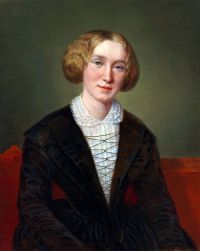
Portrait of George Eliot George Eliot,  The Mill on the Floss — Book 2… (1860)

“ He said nothing, but sat down on the sofa again, looking vaguely out of the opposite window.
Anxiety about the future had never entered Tom's mind. His father had always ridden a good horse, kept a good house, and had the cheerful, confident air of a man who has plenty of property to fall back upon. Tom had never dreamed that his father would "fail"; that was a form of misfortune which he had always heard spoken of as a deep disgrace, and disgrace was an idea that he could not associate with any of his relations, least of all with his father.
”
Source: Wikisource

Portrait of George Eliot George Eliot,  The Mill on the Floss — Book 2… (1860)

“ She was pained to hear Tom say in the holidays that Philip was as queer as ever again, and often cross. They were no longer very good friends, she perceived; and when she reminded Tom that he ought always to love Philip for being so good to him when his foot was bad, he answered: "Well, it isn't my fault; I don't do anything to him." She hardly ever saw Philip during the remainder of their school-life; in the Midsummer holidays he was always away at the seaside, and at Christmas she could only meet him at long intervals in the street of St. Ogg's. ”
Source: Wikisource

Get perspective with Kwize: daily news enlightened by great literature