Summary

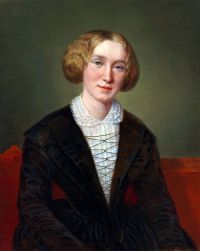
Portrait of George Eliot George Eliot,  The Mill on the Floss — Book 3… (1860)

“ Poor Maggie was by no means made up of unalloyed devotedness, but put forth large claims for herself where she loved strongly. She burst out at last in an agitated, almost violent tone: "Mother, how can you talk so; as if you cared only for things with your name on, and not for what has my father's name too; and to care about anything but dear father himself!–when he's lying there, and may never speak to us again. Tom, you ought to say so too; you ought not to let any one find fault with my father." ”
Source: Wikisource

Portrait of George Eliot George Eliot,  The Mill on the Floss — Book 3… (1860)

“ Tulliver burst out crying afresh, and she sobbed with her handkerchief at her eyes a few moments, but then removing it, she said in a deprecating way, still half sobbing, as if she were called upon to speak before she could command her voice,–
"And I did say to him times and times, 'Whativer you do, don't go to law,' and what more could I do? I've had to sit by while my own fortin's been spent, and what should ha' been my children's, too. You'll have niver a penny, my boy–but it isn't your poor mother's fault."
”
Source: Wikisource

Portrait of George Eliot George Eliot,  The Mill on the Floss — Book 3… (1860)

“ Perhaps his father might have helped bringing them all down in the world, and making people talk of them with contempt, but no one should talk long of Tom Tulliver with contempt.
The natural strength and firmness of his nature was beginning to assert itself, urged by the double stimulus of resentment against his aunts, and the sense that he must behave like a man and take care of his mother.
”
Source: Wikisource

Get perspective with Kwize: daily news enlightened by great literature