Summary

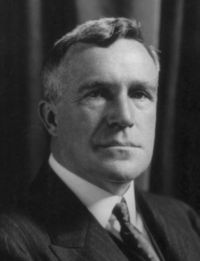
Portrait of George Horace Lorimer George Horace Lorimer Letters from a Self-Made Merchant to His Son… (1902)

I hear a good deal about men who won't take vacations, and who kill themselves by overwork, but it's usually worry or whiskey. It's not what a man does during working-hours, but after them, that breaks down his health. A fellow and his business should be bosom friends in the office and sworn enemies out of it. A clear mind is one that is swept clean of business at six o'clock every night and isn't opened up for it again until after the shutters are taken down next morning.
Source: Wikisource

Portrait of George Horace Lorimer George Horace Lorimer Letters from a Self-Made Merchant to His Son… (1902)

I take just as much pride in it as the fellow who inherits his and can't find any place to put it, except on his carriage door and his letter-head—and it's a heap more profitable. It's got so now that every jobber in the trade knows that it stands for good quality, and that's all any Englishman's coat-of-arms can stand for. Of course, an American's can't stand for anything much—generally it's the burned-in-the skin brand of a snob.
Source: Wikisource

Portrait of George Horace Lorimer George Horace Lorimer Letters from a Self-Made Merchant to His Son… (1902)

Running a business on those lines is, of course, equivalent to making a will in favor of the sheriff and committing suicide so that he can inherit. The last I heard of Dick he was ninety-three years old and just about to die. That was ten years ago, and I'll bet he's living yet. I simply mention Dick in passing as an instance of how habits rule a man's life.
There is one excuse for every mistake a man can make, but only one. When a fellow makes the same mistake twice he's got to throw up both hands and own up to carelessness or cussedness.
Source: Wikisource

Get perspective with Kwize: daily news enlightened by great literature