“ We shall all be old maids. What's the use of being pretty, either, when Violet, though she be but a bag of bones, has got the Marquis? I have been out two seasons now, and nothing has come of all the trying. And yet I was the belle of the season, wasn't I, Alice?' And now, looking more than ever like a cameo Niobe, Olive stared at her sister piteously. 'Oh yes, Alice, I know I shall be an old maid; and isn't it dreadful, and I the belle of the season? It makes me so unhappy. No one ever heard of the belle (and I was the belle not of one, but of two seasons) remaining an old maid. ”
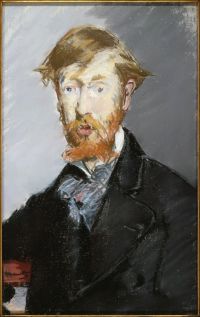
George Moore
Summary
George Moore’s Muslin, published in the late 19th century, is a novel that examines the restricted lives of young women grappling with societal norms and romantic disappointment. Focusing on characters such as Alice, Olive, and May, the story takes place within the social milieu of Dublin, the Shelbourne Hotel, and the political upheaval of the Land League. Themes of unmet longing, the pressure to wed, and the symbolic significance of clothing—skirts, gowns, and the namesake muslin—highlight the characters’ challenges.
Through disjointed conversations and vivid imagery, Moore critiques the narrow roles assigned to women, as seen in Olive’s anguish over being left as an “old maid” or Alice’s reflections on the performative nature of social customs. The novel’s composition, merging social commentary with personal drama, illustrates Moore’s fascination with the convergence of individual yearning and public turmoil.
Quotes from Muslin (George Moore)
“ Every passer-by seems to know me, to recognize me, and I cannot help imagining that he or she will be telling my unfortunate story half an hour after in the pitiless drawing-rooms of Merrion Square. Oh, Alice darling, you are the only friend I have in the world. If it were not for you, I believe I should drown myself in the Liffey. No girl was ever so miserable as I. I cannot tell you how I feel, and you cannot imagine how forlorn it all is; and I am so ill. I am always hungry, and always sick, and always longing. Oh, these longings; you may think they are nothing, but they are dreadful. ”
“ Alice saw something carried towards her, and, rushing towards May, whom she saw in the doorway, she asked for an explanation.'Oh, nothing, nothing! he slipped down—has broken or sprained his ankle—that's all. Why aren't you dancing? Greatest fun in the world—just beginning to get noisy—and we are going it. Come on, Fred; come on!'To the rowdy tune of the Posthorn Polka the different couples were dashing to and fro—all a little drunk with emotion and champagne; and, as if fascinated, Alice's eyes followed the shoulders of a tall, florid-faced man. ”
