Summary

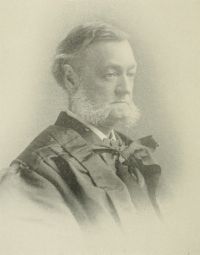
Portrait of George Shiras, Jr. George Shiras, Jr. City of Lincoln v. Power — Opinion of the Court

Whether the plaintiff was guilty of negligence in walking upon one part of the sidewalk rather than upon another, was certainly not a question of law, and was properly left to the jury.
By the twelfth prayer the court was requested to instruct the jury that where a dangerous hole is left in a sidewalk in a public street of a city, over which there is a large amount of travel, the author will be liable for an injury resulting from the act, although other causes subsequently arising may contribute to the injury.
Source: Wikisource

Portrait of George Shiras, Jr. George Shiras, Jr. City of Lincoln v. Power — Opinion of the Court

Error is assigned to the action of the court in referring to the Carlisle tables as enabling the jury to find the plaintiff's prospect of life, and the force of the objection is in the allegation that those tables had not been introduced in evidence. There is high authority for the proposition that courts can take judicial notice of the Carlisle tables, and can use them in estimating the probable length of life, whether they were introduced in evidence or not.
Source: Wikisource

Portrait of George Shiras, Jr. George Shiras, Jr. City of Lincoln v. Power — Opinion of the Court

The statutes of Nebraska require that all instructions of the court to the jury shall be in writing, unless the so giving of the same is waived by counsel in the case in open court, and so entered in the record of said case; and it is argued that, by virtue of section 914 of the Revised Statutes of the United States, such provision of the Nebraska laws is made obligatory on the circuit court of the United States for that district, and that hence it was reversible error in the court below to give oral instructions.
Source: Wikisource

Get perspective with Kwize: daily news enlightened by great literature