Summary

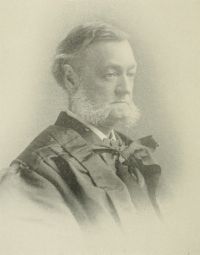
Portrait of George Shiras, Jr. George Shiras, Jr. Colburn v. Grant — Opinion of the Court

We cannot infer delinquency on the part of Colburn when there is no more proof than is contained in this record that, by his abandonment of his trust, or by his negligence in the supervision of it, he had put it in the power of his cotrustee to prove faithless in his duty. Abandonment of discretionary power by a trustee to his cotrustee is a fact to be proved by him who alleges it, and so likewise is negligence in the supervision of a trust.
Source: Wikisource

Portrait of George Shiras, Jr. George Shiras, Jr. Colburn v. Grant — Opinion of the Court

At all events, we cannot assume the contrary in the absence of proof. We cannot assume that the money became due, and that Taylor received it and reinvested it without the concurrence of Colburn, or that he wholly failed to reinvest it and converted it to his own use. That Taylor obtained control of the fund and misappropriated it is very clear, but when, or how, or under what circumstances he did so, we are not told.
Source: Wikisource

Portrait of George Shiras, Jr. George Shiras, Jr. Colburn v. Grant — Opinion of the Court

The supreme court thus expressed its conclusion:
'After a loss has occurred, as in this case, by the positive fault of someone, it may be easy to say how it could have been prevented; but in order to hold someone else fairly responsible, the point of view held by the party sought to be made liable, at and before the loss occurred, is the only safe point of view to assume.
Source: Wikisource

Get perspective with Kwize: daily news enlightened by great literature