Summary

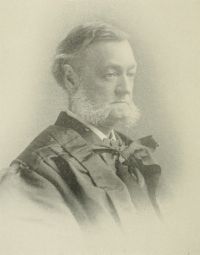
Portrait of George Shiras, Jr. George Shiras, Jr. Compton v. Jesup — Opinion of the Court

We think it quite plain that Compton is the only party having an interest in, and a right to enforce, the decree of the Ohio supreme court. The provision contained therein assessing the amount of his claim at the amount of the bonds held by him shows that the decree was intended to operate solely for his benefit; and the direction that the proceeds of sale should be brought into court, to abide its further order on the footing of the decree, is the order usually made when a sale is made by an officer appointed by the court.
Source: Wikisource

Portrait of George Shiras, Jr. George Shiras, Jr. Compton v. Jesup — Opinion of the Court

It is true that the form in which the first question is put in the certificate would seem to go on the assumption that Compton's only right is to redeem, and that the disputable matter is whether the redemption is to cover as well the Indiana as the Ohio Division. In the view, however, that we take of the subject, we prefer to read the certificate as propounding the question of the real meaning and effect of the decree of sale as affecting Compton's rights, and to thus enable the circuit court of appeals to finally determine the controversy.
Source: Wikisource

Portrait of George Shiras, Jr. George Shiras, Jr. Compton v. Jesup — Opinion of the Court

Any inconvenience that would be occasioned by a resale of a portion of the entire line can be avoided by complying with the decree and making payment accordingly. If the Wabash Railroad Company be regarded simply as an outside purchaser, it cannot be heard to object to the terms of the decree of sale. If-what is apparently its real character-it be regarded as a company formed by an arrangement between the parties controlling the sale, it has even less right to disregard the rights of Compton as stipulated for in the decree.
Source: Wikisource

Get perspective with Kwize: daily news enlightened by great literature