Summary

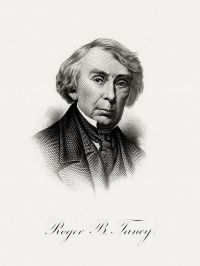
Portrait of Roger B. Taney Roger B. Taney Houston v. City Bank of New Orleans…

Nothing, it would seem, on principle, would be more proper and fitting, than that the assignee of the bankrupt should be invested with all the property, however encumbered, rights, and interests of the bankrupt; that he should have power to sell and dispose of it to the best advantage, making clear titles to the purchasers; and that he should be obliged, at the same time, to show proper regard and pay due respect to all liens and encumbrances existing on the property. In no other way can a unity in the administration of the bankrupt's estate be secured.
Source: Wikisource

Portrait of Roger B. Taney Roger B. Taney Houston v. City Bank of New Orleans…

Every thing which is not excepted passes under the act. The rights themselves, therefore, being the only matters which are excepted, the mode of enforcing those rights by an application to the State courts is not saved. Not being excepted, it is gone. If Congress had intended that the State courts should retain their jurisdiction over mortgages, and have the power of foreclosing them, the law would have said so. The argument upon the other side must be, that all these encumbrances were excluded from the operation of the law entirely.
Source: Wikisource

Portrait of Roger B. Taney Roger B. Taney Houston v. City Bank of New Orleans…

The mortgage may be illegal and invalid, or may be upon property amounting to a value greatly exceeding the debt intended to be secured by it. Is the property mortgaged under such circumstances to remain beyond the reach of the assignee? Does not every view which can be taken of the subject lead to the conclusion, that the entire property of a bankrupt, encumbered and unencumbered, should be under the control of the assignee, so as to be administered by him, with due respect to liens or not, as they may happen to exist?
Source: Wikisource

Get perspective with Kwize: daily news enlightened by great literature