Summary

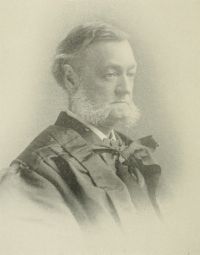
Portrait of George Shiras, Jr. George Shiras, Jr. Hicks v. United States — Opinion of the Court

Still it must be remembered that men may testify truthfully, although their lives hang in the balance, and that the law, in its wisdom, had provided that the accused shall have the right to testify in his own behalf. Such a privilege would be a vain one if the judge, to whose lightest word the jury, properly enough, give a great weight, should intimate that the dreadful condition in which the accused finds himself should deprive his testimony of probability.
Source: Wikisource

Portrait of George Shiras, Jr. George Shiras, Jr. Hicks v. United States — Opinion of the Court

We go to the first proposition, where the crime of murder has been committed, which asserts that he who with his own hand did the act which produced the result is guilty. The second proposition is that if, at the time that Andrew J. Colvard was shot by Stand Rowe, the defendant was present at that time and at the place of shooting, that, of course, would not alone make him guilty,-the mere fact that he was present.
Source: Wikisource

Portrait of George Shiras, Jr. George Shiras, Jr. Hicks v. United States — Opinion of the Court

You may explain it perhaps on the theory of an honest mistake, or a case of forgetfulness; but if there is a conflict as to material facts between his statements and the statements of the other witnesses who are telling the truth, then you would have a contradiction that would weigh against the statements of the defendant as coming from such witnesses. You are to consider his interest in this case, you are to consider his consequent motive growing out of that interest, in passing upon the truthfulness or falsity of his statement.
Source: Wikisource

Get perspective with Kwize: daily news enlightened by great literature