Summary

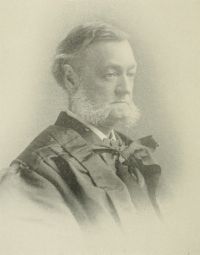
Portrait of George Shiras, Jr. George Shiras, Jr. Seabury Johnson v. Am Ende — Opinion of the Court

The next contention is that, as the plaintiff's patented dressing was composed of materials whose specific virtues and modes of operation were well known, there was no invention shown in combining them in the manner described. It is, indeed, true that the patentee did not claim to have been the first to suggest the use of cotton fiber as a means of excluding germs from wounds or from the article to be protected. Nor did he claim to have first discovered the antiseptic qualities of boracic acid or the hygroscopic property of glycerine.
Source: Wikisource

Portrait of George Shiras, Jr. George Shiras, Jr. Seabury Johnson v. Am Ende — Opinion of the Court

We, therefore, agree with the court below in thinking that 'an intelligent chemist, setting out properly to combine the enumerated ingredients into which the cotton is to be immersed, and with which it is to be impregnated, could hardly go astray.' It is also to be observed that neither the defendant, in making the infringing article, nor the several witnesses of eminence in the medical profession, who testified to the practical value of the patented dressing, seem to have had any difficulty in understanding and applying the description contained in the patent.
Source: Wikisource

Portrait of George Shiras, Jr. George Shiras, Jr. Seabury Johnson v. Am Ende — Opinion of the Court

When he directs that a small proportion of glycerine shall be added, it is obvious that the quantity of the glycerine is to vary with the amount of cotton and boracic acid used, but that the merits of the invention will not depend on whether, in a given case, a little more or less glycerine is used. Such general directions are common in the arts, as appears in some of the very publications introduced by the defendant to show anticipation.
Source: Wikisource

Get perspective with Kwize: daily news enlightened by great literature