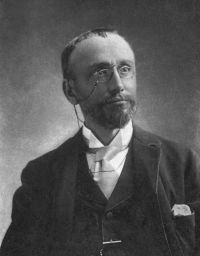
H. C. Bunner

H. C. Bunner

Summary

Portrait of H. C. Bunner H. C. Bunner Squire Five-Fathom (1887)

Myndert Gerrit saw his great mistake with his eyes, but his heart at first refused to accept the truth. He was like a man who sees death for the first time, knows it is death, and yet cannot make it real to his own mind that the blood will no more flow in the cold veins, that the heart shall not beat again; that breath and life have gone out together.
Source: Wikisource

Portrait of H. C. Bunner H. C. Bunner Squire Five-Fathom (1887)

The engineers had builded better than they knew. The old Gerrit site had been such a thing of tradition, such a futile memory of the past, that it had been left out of the towns-people's calculations, and no one, save the Squire, had considered that the removal of the current from its low shore must bring it once more into usefulness. But Gerrit's site spoke for itself. The pier crawled out fifty feet further, that summer, and the water in the inlet began to sink. No longer fed by the resistless current, it fell away in scattered pools.
Source: Wikisource

Portrait of H. C. Bunner H. C. Bunner Squire Five-Fathom (1887)

Then, with a kindly pat on the back, Abe was dismissed; but on the threshold he paused and turned to say:
"Um biddle new house this side town."
"Yes, yes, Abe," said the Squire, with a smile on his lips and a sad look in his eyes, "it'll come, it'll come. They will recognize our advantages some day, never fear."
And Abe vanished into the stormy twilight that was fast settling down.
"Abe was my body-servant when I was—when I was a young man," said the Squire; "he taught me to shoot—yes, to ride and to swim.
Source: Wikisource

Get perspective with Kwize: daily news enlightened by great literature