Summary

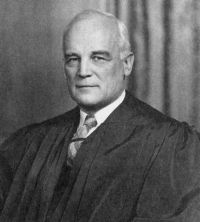
Portrait of Harold Hitz Burton Harold Hitz Burton American Tobacco Company v. United States…

No formal agreement is necessary to constitute an unlawful conspiracy. Often crimes are a matter of inference deduced from the acts of the person accused and done in pursuance of a criminal purpose. Where the conspiracy is proved, as here, from the evidence of the action taken in concert by the parties to it, it is all the more convincing proof of an intent to exercise the power of exclusion acquired through that conspiracy.
Source: Wikisource

Portrait of Harold Hitz Burton Harold Hitz Burton American Tobacco Company v. United States…

New competition dare not enter such a field, unless it be well supported by comparable national advertising. Large inventories of cigarettes, and large sums required for payment of federal taxes in advance of actual sales, further emphasize the effectiveness of a well financed monopoly in this field against potential competitors if there merely exists an intent to exclude such competitors. Prevention of all potential competition is the natural program for maintaining a monopoly here, rather than any program of actual exclusion.
Source: Wikisource

Portrait of Harold Hitz Burton Harold Hitz Burton American Tobacco Company v. United States…

In the possession of the farmers the crops are perishable as they require a redrying process. Under the modern system of marketing, the tobacco cannot be stored to await another season. The farmers have no facilities for redrying the tobacco and therefore must sell their crops in the season in which those crops are raised or they will lose them. The petitioners kept large enough tobacco stocks on hand to last about three years. The value of these stocks was over $100,000,000 for each company and these stocks assured their independence of the market in any one year.
Source: Wikisource

Get perspective with Kwize: daily news enlightened by great literature