Summary

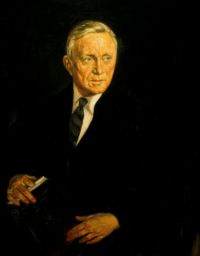
Portrait of William O. Douglas William O. Douglas United States v. Paramount Pictures…

It is, therefore, not enough in determining the need for divestiture to conclude with the District Court that none of the defendants was organized or has been maintained for the purpose of achieving a 'national monopoly,' nor that the five majors through their present theatre holdings 'alone' do not and cannot collectively or individually have a monopoly of exhibition. For when the starting point is a conspiracy to effect a monopoly through restraints of trade, it is relevant to determine what the results of the conspiracy were even if they fell short of monopoly.
Source: Wikisource

Portrait of William O. Douglas William O. Douglas United States v. Paramount Pictures…

In that way they eliminate the opportunity for the small competitor to obtain the choice first runs, and put a premium on the size of the circuit. They are, therefore, devices for stifling competition and diverting the cream of the business to the large operators. In the second place, the pooling of the purchasing power of an entire circuit in bidding for films is a misuse of monopoly power insofar as it combines the theatres in closed towns with competitive situations.
Source: Wikisource

Portrait of William O. Douglas William O. Douglas United States v. Paramount Pictures…

If that were allowed, then the exhibitor-defendants would have an easy method of keeping alive at least some of the consequences of the effective conspiracy which they launched. For they could then justify clearances granted by other distributors in favor of their theatres in terms of the competitive requirements of those theatres, and at the same time justify the restrictions they impose upon independents in terms of the necessity of protecting their film rental as licensor. That is too potent a weapon to leave in the hands of those whose proclivity to unlawful conduct has been so marked.
Source: Wikisource

Get perspective with Kwize: daily news enlightened by great literature