Summary

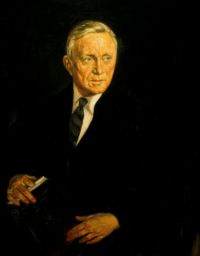
Portrait of William O. Douglas William O. Douglas United States v. Crescent Amusement Company…

If it is a burden which cannot be lightened by application to the court for exercise of the power which it has reserved over the decree, it is a burden which those who have violated the Act must carry. And the fact that there may be somewhere in the background a greater conspiracy from which flow consequences more serious than we have here is no warrant for a refusal to deal with the lesser one which is before us.
Source: Wikisource

Portrait of William O. Douglas William O. Douglas United States v. Crescent Amusement Company…

The showing of motion pictures is of course a local affair. But action by a combination of exhibitors to obtain an agreement with a distributor whereby commerce with a competing exhibitor is suppressed or restrained is a conspiracy in restraint of trade and a conspiracy to monopolize a part of the trade or commerce among the States, each of which is prohibited by the Sherman Act. And as we have said, the course of business which involves a regular exchange of films in interstate commerce is adequate to bring the exhibitors within the reach of the Sherman Act.
Source: Wikisource

Portrait of William O. Douglas William O. Douglas United States v. Crescent Amusement Company…

Common control was one of the instruments in bringing about unity of purpose and unity of action and in making the conspiracy effective. If that affiliation continues, there will be tempting opportunity for these exhibitors to continue to act in combination against the independents. The proclivity in the past to use that affiliation for an unlawful end warrants effective assurance that no such opportunity will be available in the future. Hence we do not think the District Court abused its discretion in failing to limit the relief to an injunction against future violations.
Source: Wikisource

Get perspective with Kwize: daily news enlightened by great literature