Summary

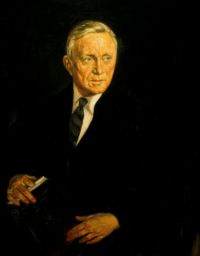
Portrait of William O. Douglas William O. Douglas Schine Chain Theatres v. United States…

To require divestiture of theatres unlawfully acquired is not to add to the penalties that Congress has provided in the antitrust laws. Like restitution it merely deprives a defendant of the gains from his wrongful conduct. It is an equitable remedy designed in the public interest to undo what could have been prevented had the defendants not outdistanced the government in their unlawful project.
Source: Wikisource

Portrait of William O. Douglas William O. Douglas Schine Chain Theatres v. United States…

On the whole we think the District Court was justified in drawing the inference of unlawful purpose from the ambiguous episodes and that those coupled with the others are adequate to support these findings of the District Court.
(4) We reach the same result as respects the agreements not to compete which Schine exacted from competitors whom it bought out. It is not enough that the agreements may be valid under local law. Even an otherwise lawful device may be used as a weapon in restraint of trade or in an effort to monopolize a part of trade or commerce.
Source: Wikisource

Portrait of William O. Douglas William O. Douglas Schine Chain Theatres v. United States…

Thus it may be the instrument of monopoly power to eliminate competitors or to bring them to their knees. But since it is not unlawful per se, facts and circumstances must be adduced to show that it was in purpose or effect m ployed as an instrument of monopoly power. Here there is nothing except a bare finding that at times Schine cut admission prices. That finding is not sufficiently discriminating to withstand analysis and is not adequate to support an injunction against price cutting.
(8) The finding as to unreasonable clearances presents rather large issues.
Source: Wikisource

Get perspective with Kwize: daily news enlightened by great literature